
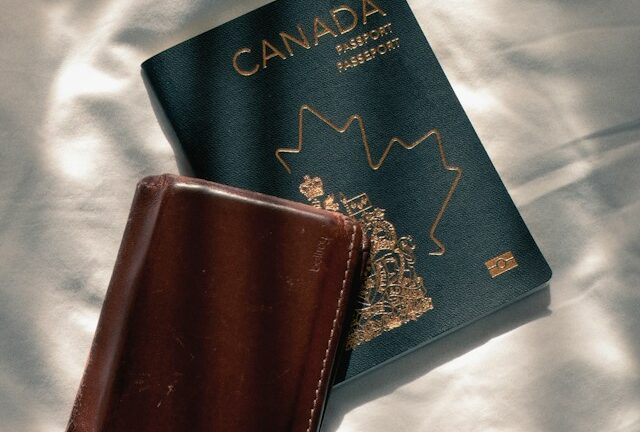
If you are living in Canada and planning to renew your passport or submit visa documents through official application centers across Toronto, Vancouver, or Ottawa, paying close attention to your photograph specifications is critical. Asian Consulates and diplomatic missions across Canada strictly enforce compliance based on International Civil Aviation Organization (ICAO) standards. A significant percentage of passport applications are rejected or returned at the intake counter simply because the submitted photographs fail to meet these precise biometric rules.
The primary issue facing applicants in Canada is that standard Canadian passport photo specifications differ subtly but significantly from international ICAO standards. While local Canadian photo studios are accustomed to Canadian domestic passport requirements, using a standard Canadian specification photo for an Asian passport renewal often leads to immediate rejection, requiring extra trips to the application center, unexpected re-take fees, and delayed processing times.
Technical Specifications for ICAO Passport Photos
To pass automated biometric checks and manual consular verification, your physical and digital photos must adhere strictly to ICAO dimension standards. The overall photo size must measure exactly 2 inches by 2 inches (51 mm by 51 mm) or 35 mm by 45 mm depending on specific mission guidelines, with the face occupying 70% to 80% of the total frame area. The measurement from the bottom of the chin to the top of the head must closely match strict biometric ratios.
The photograph must be printed on high-quality matte or semi-matte photo paper with a plain, neutral white background. Glossy prints, colored backgrounds, off-white backdrops, or textured paper are strictly prohibited. The image must show a clear, full-face frontal view with both ears visible, neutral facial expressions, eyes open, and mouth closed. Furthermore, the photo must be taken within six months of application submission to reflect your current appearance accurately.
Common Mistakes Causing Instant Application Rejections
Understanding the common pitfalls can save you significant time during your appointment. Shadows are the single most frequent reason for rejection. Shadows cast behind the ears, on the backdrop, or across the face due to poor studio lighting will trigger an automated biometric rejection. Similarly, uneven lighting across the face or overexposure caused by heavy flash reflection will make the photo unusable for facial recognition systems.
Eyeglasses are another major source of non-compliance. Consular guidelines strongly recommend removing all eyewear for passport photos to avoid processing delays. Reflections, glare on lenses, heavy frames obscuring the eyes, or tinted lenses will cause immediate rejection. Additionally, wearing light-colored or white clothing that blends into the white background is prohibited, as there must be strong contrast between your attire and the backdrop.
Head coverings worn for religious reasons are permitted, provided the full face from the bottom of the chin to the top of the forehead and both edges of the face remain completely visible without casting shadows on the countenance. For additional guidance on passport requirements and appointment scheduling, visit the official Immigration, Refugees and Citizenship Canada Portal or your local consulate page.
Printable Cheat-Sheet to Show Your Photographer
When visiting a local photo studio in Canada, do not simply ask for a “standard Canadian passport photo,” as the studio will likely print standard Canadian-sized photos by default. Instead, instruct the photographer clearly that you require International ICAO Specifications and share these exact instructions.
Instruct the photographer to set the frame dimensions according to ICAO specifications with a strict, plain white background. Emphasize that your head size must be zoomed in to cover 70% to 80% of the image frame. Request that they adjust studio lighting to eliminate all background and facial shadows, ensure you are not wearing white clothing, and confirm the final output is printed on matte or semi-matte finish photo paper.